Home » Lab Capabilities » Dissolution Methods

Pharmaceutical Dissolution Testing & Development
Dissolution Testing as a Drug Product Development Tool
At Avivia, pharmaceutical dissolution testing is more than a routine analytical or quality-control test. It is an important tool for understanding drug product performance and guiding formulation development.
Dissolution scientists work closely with Pharmaceutical R&D and Analytical R&D throughout development. Dissolution profiles are evaluated together with observations of the dosage form, formulation composition, API and excipient properties, manufacturing parameters and, where relevant, available preclinical or clinical information.
This integrated approach allows dissolution testing to support formulation selection and optimization, reference-product comparison, troubleshooting, biorelevant method development and the development of discriminatory methods for subsequent routine testing. We provide a complete range of dissolution apparatus, from Apparatus I and II to the more advanced Apparatus III and IV.

Avivia provides integrated pharmaceutical R&D services in formulation, analytical development, dissolution and excipient analysis.

Dissolution Method Development
The experience and knowledge-based pharmaceutical dissolution development platform within Avivia focuses primarily on supporting formulation development and problem solving.
For us, dissolution testing is never a routine test, but an essential tool in pharmaceutical formulation development to:
- evaluate the physico-chemical properties of drug candidates to select the most appropriate solid form for further development (pre-formulation)
- perform biorelevant in-vitro tests to mimic fed and fasted state conditions
- compare prototype formulations (preclinical selection)
- elucidate drug release mechanism (diffusion, erosion, etc.)
- as an indicator of stability (e.g., temperature, humidity)
- as an indicator of the robustness of the manufacturing and
- assure safe release and reproducibility of the products to the market.
Dissolution testing should be a discriminatory method that is sensitive to variables affecting release rate and ideally has a predictive value for bio-performance.
It takes a lot of skills, knowledge and experience to design dissolution testing methods that contribute to the development of safe, robust and successful pharmaceutical dosage forms.

Dissolution Development
Development of discriminatory and biorelevant dissolution methods integrated with formulation and analytical development, including troubleshooting, reference-product comparison and translation to routine testing.
Dissolution Theory & Noyes–Whitney
Background on pharmaceutical dissolution, dissolution rate, solubility and the Noyes–Whitney equation and their relevance to drug product performance.
Pharmaceutical Dissolution Equipment and Techniques
Avivia has a complementary range of dissolution technologies, allowing the experimental setup to be selected according to the dosage form and development question rather than being limited to a single standard apparatus:
• USP 1 / apparatus I / apparatus 1 / Basket dissolution apparatus
• USP 2 / apparatus II / apparatus 2 / Paddle dissolution apparatus
• USP 3 / apparatus III / apparatus 3 / Reciprocating cylinder dissolution apparatus / BioDis
• USP 4 / apparatus IV / apparatus 4 / Flow through cell dissolution apparatus
• Pion µDiss Profiler (low volume in situ fiber optic UV monitoring dissolution and solubility system)
Intrinsic, Apparent and Custom Dissolution Testing
In addition to conventional dosage-form dissolution testing, Avivia can perform intrinsic and apparent dissolution studies. Available approaches include the Wood apparatus, Pion µDiss Profiler and dedicated USP IV flow cells for powders, granules and APIs.
Where standard apparatus does not adequately address the development question, alternative techniques may be accessed through our network or a tailor-made experimental setup can be designed.
The important consideration is not simply which equipment is available, but selecting an experimental approach that provides meaningful information for the formulation or development problem.
Biorelevant Dissolution and in-vitro in-vivo correlation (IVIVC)
Avivia has experience developing biorelevant dissolution approaches and, in cooperation with clinical research partners, establishing in-vitro/in-vivo correlations for modified-release dosage forms. Where suitable data are available, clinical or pharmacokinetic information can help guide dissolution method development and interpretation of formulation performance.
What Can Avivia Help You Investigate?
Pharmaceutical dissolution questions are often closely connected to formulation composition, API and excipient properties, manufacturing conditions or the analytical method itself. Avivia combines dissolution, formulation and analytical expertise to investigate questions such as:
Formulation Performance
Why does my formulation not achieve the intended dissolution profile?
Differences in API properties, excipients, disintegration, matrix behaviour, manufacturing conditions or dosage-form design may affect drug release. Dissolution results can be evaluated together with formulation knowledge and observations during testing to identify likely causes and guide formulation optimization.
Why do apparently similar formulations show different dissolution behaviour?
Small differences in composition, excipient grade, processing or physical product properties can sometimes produce meaningful differences in release. A discriminatory dissolution approach can help identify which formulation or process variables are relevant.
Reference-product and Generic Development
How does my formulation compare with the reference product?
Comparative dissolution profiles can be combined with physical observations and formulation knowledge to understand differences between reference and prototype products. Where needed, Avivia can integrate dissolution with formulation development and Excipia deformulation or excipient characterization.
How can dissolution testing guide development of a generic or hybrid formulation?
Rather than waiting until a formulation is finalized, dissolution testing can be used iteratively during development. Prototype formulations are tested, results and observations are discussed with the formulation scientists, and subsequent prototypes can be adapted based on the findings.
Method Development and Troubleshooting
Our dissolution method is not sufficiently discriminatory. How can it be improved?
Apparatus, medium composition, pH, agitation or flow rate, sink conditions and other experimental parameters can influence discriminatory power. Method conditions should be selected based on the formulation and the product attributes that the test needs to distinguish.
Why are our dissolution results variable or difficult to explain?
The cause may lie in the formulation, dissolution conditions, sampling, filtration, sample stability or analytical determination. Avivia can evaluate these factors together rather than investigating the dissolution and analytical methods independently.
Explore Pharmaceutical Dissolution Method Development & Troubleshooting
Biorelevant and Product-Performance Questions
How can fed, fasted or changing gastrointestinal conditions be investigated in vitro?
Where relevant to the product, dissolution methods can incorporate sequential media, changing pH and different hydrodynamic conditions. USP Apparatus III and IV can provide additional flexibility for development of biorelevant dissolution approaches.
Can a complex development dissolution method be translated into a simpler routine method?
Yes. Advanced R&D methods can be useful for understanding formulation behaviour, while a simpler and robust method may ultimately be preferable for routine product testing. Once critical product and method variables are understood, Avivia can investigate whether the discriminatory characteristics can be transferred to a more conventional method suitable for routine use.
Dissolution Development Case Study
Dissolution testing can provide considerably more information when drug release is evaluated together with the behaviour of the formulation and its excipients.
Understanding Drug Release Through Excipient Behaviour
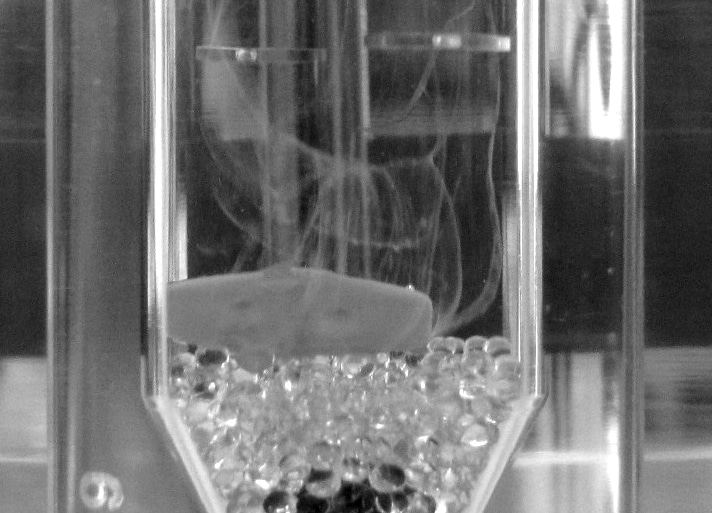
In one Avivia development project, drug release from a controlled-release hypromellose (HPMC) matrix tablet was evaluated together with HPMC release using USP Apparatus III. The results showed that HPMC release occurred faster than drug release and indicated an erosion-dominated release mechanism. This made the formulation particularly sensitive to the properties of the HPMC used in the formulation.
By combining Avivia’s dissolution and formulation expertise with specialized excipient characterization by Excipia, the relevant HPMC properties could subsequently be investigated and controlled through product-specific specifications.